What is Church teaching on the size of government? And what is the principle of subsidiarity? Find out more about charity and responsibility in this new video from the CatholicVote.org Education Fund.

Sunday, August 17, 2014

Saturday, August 16, 2014
Satan Called a Convention
Satan called a worldwide convention of demons. In his opening address he said, "We can't keep Christians from going to church. We can't keep them from reading their Bibles and knowing the truth. We can't even keep them from forming an intimate relationship with their Savior. Once they gain that connection with Jesus, our power over them is broken. So let them go to their churches; let them have their covered dish dinners, but steal their time, so they don't have time to develop a relationship with Jesus Christ. This is what I want you to do," said the devil: "Distract them from gaining hold of their Savior and maintaining that vital connection throughout their day!"
"How shall we do this?" his demons shouted. "Keep them busy in the nonessentials of life and invent innumerable schemes to occupy their minds," he answered. "Tempt them to spend, spend, spend, and borrow, borrow, borrow. Persuade the wives to go to work for long hours and the husbands to work 6-7 days each week, 10-12 hours a day, so they can afford their empty lifestyles. Keep them from spending time with their children. As their families fragment, soon their homes will offer no escape from the pressures of work!"
"Over-stimulate their minds so that they cannot hear that still, small voice. Entice them to play the radio or cassette player whenever they drive. To keep the TV, VCR, CDs and their PCs going constantly in their home and see to it that every store and restaurant in the world plays non-biblical music constantly. This will jam their minds and break that union with Christ. Fill the coffee tables with magazines and newspapers. Pound their minds with the news 24 hours a day. Invade their driving moments with billboards. Flood their mailboxes with junk mail, mail order catalogs, sweepstakes, and every kind of newsletter and promotional offering free products, services and false hopes."
"Give them Santa Claus to distract them from teaching their children the real meaning of Christmas. Give them an Easter bunny so they won't talk about his resurrection and power over sin and death. Even in their recreation, let them be excessive. Have them return from their recreation exhausted. Keep them too busy to go out in nature and reflect on God's creation. Send them to amusement parks, sporting events, plays, concerts, and movies instead. Keep them busy, busy, busy!"
"And when they meet for spiritual fellowship, involve them in gossip and small talk so that they leave with troubled consciences. Crowd their lives with so many good causes they have no time to seek power from Jesus. Soon they will be working in their own strength, sacrificing their health and family for the good of the cause. It will work! It will work!"
It was quite a plan! The demons went eagerly to their assignments causing Christians everywhere to get busier and more rushed, going here and there, having little time for their God or their families and friends. Having no time to tell others about the power of Jesus to change lives. I guess the question is, has the devil been successful at his scheme? You be the judge!
Does "busy" mean: B-eing U-nder S-atan's Y-oke?
Author Unknown

"How shall we do this?" his demons shouted. "Keep them busy in the nonessentials of life and invent innumerable schemes to occupy their minds," he answered. "Tempt them to spend, spend, spend, and borrow, borrow, borrow. Persuade the wives to go to work for long hours and the husbands to work 6-7 days each week, 10-12 hours a day, so they can afford their empty lifestyles. Keep them from spending time with their children. As their families fragment, soon their homes will offer no escape from the pressures of work!"
"Over-stimulate their minds so that they cannot hear that still, small voice. Entice them to play the radio or cassette player whenever they drive. To keep the TV, VCR, CDs and their PCs going constantly in their home and see to it that every store and restaurant in the world plays non-biblical music constantly. This will jam their minds and break that union with Christ. Fill the coffee tables with magazines and newspapers. Pound their minds with the news 24 hours a day. Invade their driving moments with billboards. Flood their mailboxes with junk mail, mail order catalogs, sweepstakes, and every kind of newsletter and promotional offering free products, services and false hopes."
"Give them Santa Claus to distract them from teaching their children the real meaning of Christmas. Give them an Easter bunny so they won't talk about his resurrection and power over sin and death. Even in their recreation, let them be excessive. Have them return from their recreation exhausted. Keep them too busy to go out in nature and reflect on God's creation. Send them to amusement parks, sporting events, plays, concerts, and movies instead. Keep them busy, busy, busy!"
"And when they meet for spiritual fellowship, involve them in gossip and small talk so that they leave with troubled consciences. Crowd their lives with so many good causes they have no time to seek power from Jesus. Soon they will be working in their own strength, sacrificing their health and family for the good of the cause. It will work! It will work!"
It was quite a plan! The demons went eagerly to their assignments causing Christians everywhere to get busier and more rushed, going here and there, having little time for their God or their families and friends. Having no time to tell others about the power of Jesus to change lives. I guess the question is, has the devil been successful at his scheme? You be the judge!
Does "busy" mean: B-eing U-nder S-atan's Y-oke?
Author Unknown

Friday, August 15, 2014
99 Balloons
Eliot was born with an undeveloped lung, a heart with a hole in it and DNA that placed faulty information into each and every cell of his body. However, that could not stop the living God from proclaiming Himself through this boy who never uttered a word.
Check out www.ninetynineballoons.com for more information about Eliot.
Check out www.ninetynineballoons.com for more information about Eliot.
Thursday, August 14, 2014
Welcome Home
In Mathew 5:8, Jesus said, "Blessed are the pure in heart, for they shall see God." This short film, produced by Cory Heimann of Likable Art, metaphorically communicates the importance and beauty of confession, showing the parallel between home plate on the baseball diamond and the human soul.
Wednesday, August 13, 2014
Prologue from Rediscover Catholicism
Imagine this.
You’re driving home from work next Monday. You turn on the radio and you hear a brief report about a small village in India where some people have suddenly died, strangely, of a flu that has never been seen before. It’s not influenza, but 4 people are dead, so the CDC is sending some doctors to India to investigate.
You don’t think to much about it—people die every day—but coming home from church the following Sunday you hear another report on the radio, only now they say it’s not 4 people who have died, but 30,000 (Kelly, 2010) in the back hills of India. Whole villages have been wiped out and experts confirm this flu is a strain that has never been seen before.
By the time you get up Monday morning, it’s the lead story. The disease is spreading. IT’s not just India that is affected. Now it has spread to Pakistan, Afghanistan, Iran, Iraq, and northern Africa, but it still seems far away. Before you know it, you’re hearing about this story everywhere. The media have now coined it “the mystery flu.” The president had announced that he and his family are praying for the victims and their families, and are hoping for the situation to be resolved quickly. But everyone is wondering how we are ever going to contain it.
That’s when the President of France makes an announcement that shocks Europe: He is closing the French borders. No one can enter the country and that’s why that night you’re watching a little bit of CNN before going to bed. Your jaw hits your chest when a weeping woman’s word are translated into English from a French news program: There’s a man lying in a hospital in Paris dying of the mystery flu. It has come to Europe.
Panic strikes. As best they can tell, after contracting the disease, you have it for a week before you even know it, then you have 4 days of unbelievable symptoms, and then you die.
The British close their borders, but it’s too late. The disease breaks out in Southampton, Liverpool, and London, and on Tuesday morning the President of the US makes the following announcement: Due to a national-security risk, all flights to and from the US have been canceled. IF your loved ones are overseas, I’m sorry. They cannot come home until we find a cure for this horrific disease.
Within 4 days, America is plunged into an unbelievable fear. People are wondering, what if it comes to this country? Preachers on TV are saying it’s the scourage of God. Then on Tuesday night you are at church for boble study when someone runs in from the parking lot and yells, “Turn on a radio!” And while everyone listens to a small radio, the announcement is made: Two women are lying in a hospital in NYC dying of the mystery flu. It has come to America.

Within hours the disease envelops the country. People are working around the clock, trying to find an antidote but nothing is working. The disease breaks out in CA, OR, AR, FL, MA, it’s as though it’s just sweeping in from the borders.
Then suddenly the news come out: The code has been broken. A cure has been found, A vaccine can be made. But it’s going to take the blood of somebody who hasn’t been infected. So you and I are asked to do just one thing; Go to the nearest hospital and have our blood tested. When we hear the sirens go off in our neighborhood, we are to make out way quickly, quietly, and safely to the hospital.
Sure enough, by the time you and your family get to the hospital it’s late Friday night. There are long lines of people and a constant rush of doctors and nurses taking blood and putting labels on it. Finally it is your turn. You go first , then your spouse and children follow, and once the doctors have taken your blood they say to you, “Wait here in the parking lot for your name to be called.” You stand around with your family and neighbors, scared, waiting, wondering. Wondering quietly to yourself, what on earth is going on here? Is this the end of the world? How did it ever come to this?
Nobody seems to have had their name called; the doctors just keep taking peoples blood. But then suddenly a young man comes running out of the hospital screaming. He’s yelling a name and waving a clipboard. You don’t hear him at first. “What’s he saying?” Someone asks. The young man screams the name again as he and a team of medical staff run in your direction, but again you cannot hear him, But then your son tugs on your jacket and says, “Daddy, that’s me, That’s my name they’re calling” Before you know it, they have grabbed your boy. “Wait a minute, Hold on!” you say, running after them. “That’s my son.”
“It’s okay,” they reply. “We think he has the right blood type. We just need to check one more time to make sure he doesn’t have the disease.”
Five tense minutes later, outcome the doctors and nurses, crying and hugging each other; some are even laughing. It’s the first time you have seen anybody laugh in a week. An old doctor walks up to you and your spouse and says, “thank you, your son’s blood is perfect. It’s clean, it’s pure, he doesn’t have the disease, and we can use it to make the vaccine.”
As the news begins to spread across the parking lot, people scream and pray and laugh and cry. You can hear the crowd erupting in the background as the gray-haired doctor pulls you and your spouse aside to say, “I need to talk to you. We didn’t realize that the donor would be a minor and we…we need you to sign a consent form.”
The doctor presents the form and you quickly begin to sign it, but then your eyes catches something. The box for the number of pints of blood to be takes is empty.
“How many pints?” you ask. That is when the old doctors smile fades, and he says,”We had no idea it would be a child. We weren’t prepared for that”.
You ask him again, “how many pints?” The old doctor looks away and says regretfully, “We are going to need it all!”
“But I don’t understand. What do you mean you need it all? He’s my only son!”
The doctor grabs you by the shoulders, pulls you close, looks you straight in the eyes, and says, “We are talking about the whole world here, Do you understand? The whole world. Please sign the form. We need to hurry!”
“But can’t you give him a transfusion?” You plead.
“If we had clean blood we would, but we don’t. Please, will you sign the form?” What would you do?
In numb silence you sign the form because you know it’s the only thing to do. Then the doctor says to you, “Would you like to have a moment with your son before we get started?”
Could you walk into that hospital room where your son sits on a table saying, “Daddy? Mommy? What’s going on?” Could you tell your son you love him? And when the doctors and nurse come back in and say, “I’m sorry we’ve got to get started now; people all over the world are dying,” could you leave? Could you walk out while your son is crying out to you, “Mom? Dad? What’s going on? Where are you going? Why are you leaving? Why have you abandoned me?”
The following week, they hold a ceremony to honor your son for his phenomenal contribution to humanity…but some people sleep through it, others don’t even bother to come because they have better things to do, and some people come with pretentious smiles and pretend to care, while others sit around and say, “This is boring!” Wouldn’t you want to stand up and say, “Excuse me! I’m not sure if you aware of it or not, but the amazing life you have, my son died so that you could have that life. My son died so that you could live. He died for you. Does it mean nothing to you?”
Perhaps this is what God wants to say.
Father, seeing it form your eyes should break our hearts. Maybe now we can begin to comprehend the great love you have for us.
Kelly, M. (2010). Rediscovering Catholicism (2nd ed.). Cincinnati, OH: Beacon Publishing.
You’re driving home from work next Monday. You turn on the radio and you hear a brief report about a small village in India where some people have suddenly died, strangely, of a flu that has never been seen before. It’s not influenza, but 4 people are dead, so the CDC is sending some doctors to India to investigate.
You don’t think to much about it—people die every day—but coming home from church the following Sunday you hear another report on the radio, only now they say it’s not 4 people who have died, but 30,000 (Kelly, 2010) in the back hills of India. Whole villages have been wiped out and experts confirm this flu is a strain that has never been seen before.
By the time you get up Monday morning, it’s the lead story. The disease is spreading. IT’s not just India that is affected. Now it has spread to Pakistan, Afghanistan, Iran, Iraq, and northern Africa, but it still seems far away. Before you know it, you’re hearing about this story everywhere. The media have now coined it “the mystery flu.” The president had announced that he and his family are praying for the victims and their families, and are hoping for the situation to be resolved quickly. But everyone is wondering how we are ever going to contain it.
That’s when the President of France makes an announcement that shocks Europe: He is closing the French borders. No one can enter the country and that’s why that night you’re watching a little bit of CNN before going to bed. Your jaw hits your chest when a weeping woman’s word are translated into English from a French news program: There’s a man lying in a hospital in Paris dying of the mystery flu. It has come to Europe.
Panic strikes. As best they can tell, after contracting the disease, you have it for a week before you even know it, then you have 4 days of unbelievable symptoms, and then you die.
The British close their borders, but it’s too late. The disease breaks out in Southampton, Liverpool, and London, and on Tuesday morning the President of the US makes the following announcement: Due to a national-security risk, all flights to and from the US have been canceled. IF your loved ones are overseas, I’m sorry. They cannot come home until we find a cure for this horrific disease.
Within 4 days, America is plunged into an unbelievable fear. People are wondering, what if it comes to this country? Preachers on TV are saying it’s the scourage of God. Then on Tuesday night you are at church for boble study when someone runs in from the parking lot and yells, “Turn on a radio!” And while everyone listens to a small radio, the announcement is made: Two women are lying in a hospital in NYC dying of the mystery flu. It has come to America.
Within hours the disease envelops the country. People are working around the clock, trying to find an antidote but nothing is working. The disease breaks out in CA, OR, AR, FL, MA, it’s as though it’s just sweeping in from the borders.
Then suddenly the news come out: The code has been broken. A cure has been found, A vaccine can be made. But it’s going to take the blood of somebody who hasn’t been infected. So you and I are asked to do just one thing; Go to the nearest hospital and have our blood tested. When we hear the sirens go off in our neighborhood, we are to make out way quickly, quietly, and safely to the hospital.
Sure enough, by the time you and your family get to the hospital it’s late Friday night. There are long lines of people and a constant rush of doctors and nurses taking blood and putting labels on it. Finally it is your turn. You go first , then your spouse and children follow, and once the doctors have taken your blood they say to you, “Wait here in the parking lot for your name to be called.” You stand around with your family and neighbors, scared, waiting, wondering. Wondering quietly to yourself, what on earth is going on here? Is this the end of the world? How did it ever come to this?
Nobody seems to have had their name called; the doctors just keep taking peoples blood. But then suddenly a young man comes running out of the hospital screaming. He’s yelling a name and waving a clipboard. You don’t hear him at first. “What’s he saying?” Someone asks. The young man screams the name again as he and a team of medical staff run in your direction, but again you cannot hear him, But then your son tugs on your jacket and says, “Daddy, that’s me, That’s my name they’re calling” Before you know it, they have grabbed your boy. “Wait a minute, Hold on!” you say, running after them. “That’s my son.”
“It’s okay,” they reply. “We think he has the right blood type. We just need to check one more time to make sure he doesn’t have the disease.”
Five tense minutes later, outcome the doctors and nurses, crying and hugging each other; some are even laughing. It’s the first time you have seen anybody laugh in a week. An old doctor walks up to you and your spouse and says, “thank you, your son’s blood is perfect. It’s clean, it’s pure, he doesn’t have the disease, and we can use it to make the vaccine.”
As the news begins to spread across the parking lot, people scream and pray and laugh and cry. You can hear the crowd erupting in the background as the gray-haired doctor pulls you and your spouse aside to say, “I need to talk to you. We didn’t realize that the donor would be a minor and we…we need you to sign a consent form.”
The doctor presents the form and you quickly begin to sign it, but then your eyes catches something. The box for the number of pints of blood to be takes is empty.
“How many pints?” you ask. That is when the old doctors smile fades, and he says,”We had no idea it would be a child. We weren’t prepared for that”.
You ask him again, “how many pints?” The old doctor looks away and says regretfully, “We are going to need it all!”
“But I don’t understand. What do you mean you need it all? He’s my only son!”
The doctor grabs you by the shoulders, pulls you close, looks you straight in the eyes, and says, “We are talking about the whole world here, Do you understand? The whole world. Please sign the form. We need to hurry!”
“But can’t you give him a transfusion?” You plead.
“If we had clean blood we would, but we don’t. Please, will you sign the form?” What would you do?
In numb silence you sign the form because you know it’s the only thing to do. Then the doctor says to you, “Would you like to have a moment with your son before we get started?”
Could you walk into that hospital room where your son sits on a table saying, “Daddy? Mommy? What’s going on?” Could you tell your son you love him? And when the doctors and nurse come back in and say, “I’m sorry we’ve got to get started now; people all over the world are dying,” could you leave? Could you walk out while your son is crying out to you, “Mom? Dad? What’s going on? Where are you going? Why are you leaving? Why have you abandoned me?”
The following week, they hold a ceremony to honor your son for his phenomenal contribution to humanity…but some people sleep through it, others don’t even bother to come because they have better things to do, and some people come with pretentious smiles and pretend to care, while others sit around and say, “This is boring!” Wouldn’t you want to stand up and say, “Excuse me! I’m not sure if you aware of it or not, but the amazing life you have, my son died so that you could have that life. My son died so that you could live. He died for you. Does it mean nothing to you?”
Perhaps this is what God wants to say.
Father, seeing it form your eyes should break our hearts. Maybe now we can begin to comprehend the great love you have for us.
Kelly, M. (2010). Rediscovering Catholicism (2nd ed.). Cincinnati, OH: Beacon Publishing.
Tuesday, August 12, 2014
Empty Easter Basket Expresses God's Love

From Chicken Soup for the Christian Soul
By Ida Mae Kempel
Jeremy was born with a twisted body, a slow mind and a chronic, terminal illness that had been slowly killing him all his young life. Still, his parents had tried to give him as normal a life as possible and had sent him to St. Theresa's Elementary School. At the age of 12, Jeremy was only in second grade, seemingly unable to learn.
His teacher, Doris Miller, often became exasperated with him. He would squirm in his seat, drool and make grunting noises. At other times, he spoke clearly and distinctly, as if a spot of light had penetrated the darkness of his brain. Most of the time, however, Jeremy irritated his teacher.
One day, she called his parents and asked them to come to St. Teresa's for a consultation. As the Foresters sat quietly in the empty classroom, Doris said to them, "Jeremy really belongs in a special school. It isn't fair to him to be with younger children who don't have learning problems. Why, there is a five-year gap between his age and that of the other students!" Mrs. Forrester cried softly into a tissue while her husband spoke. "Miss Miller," he said, "there is no school of that kind nearby. It would be a terrible shock for Jeremy if we had to take him out of this school. We know he really likes it here."
Doris sat for a long time after they left, staring at the snow outside the window. Its coldness seemed to seep into her soul. She wanted to sympathize with the Foresters. After all, their only child had a terminal illness. But it wasn't fair to keep him in her class. She had 18 other youngsters to teach and Jeremy was a distraction. Furthermore, he would never learn to read or write. Why spend any more time trying? As she pondered the situation, guilt washed over her. "Oh God," she said aloud, "here I am complaining when my problems are nothing compared with that poor family! Please help me to be more patient with Jeremy." From that day on, she tried hard to ignore Jeremy 's noises and his blank stares.
Then one day he limped to her desk, dragging his bad leg behind him. "I love you, Miss Miller," he exclaimed, loudly enough for the whole class to hear. The other children snickered, and Doris's face turned red. She stammered, "wh-why, that's very nice, Jeremy. Now please take your seat."
Spring came, and the children talked excitedly about the coming of Easter. Doris told them the story of Jesus, and then to emphasize the idea of new life springing forth, she gave each of the children a large plastic egg. "Now," she said to them "I want you to take this home and bring it back tomorrow with something inside that shows new life. Do you understand?"
"Yes, Miss Miller!" The children responded enthusiastically - all except for Jeremy. He just listened intently; his eyes never left her face. He did not even make his usual noises. Had he understood what she had said about Jesus' death and resurrection? Did he understand the assignment? Perhaps she should call his parents and explain the project to them.
That evening, Doris' kitchen sink stopped up. She called the landlord and waited an hour for him to come by and unclog it. After that, she still had to shop for groceries, iron a blouse and prepare a vocabulary test for the next day. She completely forgot about phoning Jeremy 's parents.
The next morning, 19 children came to school, laughing and talking as they placed their eggs in the large wicker basket on Miss Miller's desk. After they completed their math lesson, it was time to open the eggs. In the first egg, Doris found a flower. "Oh yes, a flower is certainly a sign of new life," she said. "When plants peek through the ground we know that spring is here. "A small girl in the first row waved her arms. "That's my egg, Miss Miller," she called out. The next egg contained a plastic butterfly, which looked very real. Doris held it up. "We all know that a caterpillar changes and turns into a beautiful butterfly. Yes, that is new life, too" little Judy smiled proudly and said, "Miss Miller, that one is mine."
Next Doris found a rock with moss on it. She explained that the moss, too, showed life. Billy spoke up from the back of the classroom. "My daddy helped me!" He beamed. Then Doris opened the fourth egg. She gasped. The egg was empty! Surely it must be Jeremy 's, she thought, and, of course, he did not understand her instructions. If only she had not forgotten to phone his parents. Because she did not want to embarrass him, she quietly set the egg aside and reached for another.
Suddenly Jeremy spoke up. "Miss Miller, aren't you going to talk about my egg?" Flustered, Doris replied, "but Jeremy - your egg is empty!" He looked into her eyes and said softly, "yes, but Jesus' tomb was empty too!" Time stopped. When she could speak again. Doris asked him, "Do you know why the tomb was empty?" "Oh yes!" Jeremy exclaimed. "Jesus was killed and put in there. Then his Father raised him up!" The recess bell rang. While the children excitedly ran out to the school yard, Doris cried. The cold inside her melted completely away.
Three months later Jeremy died. Those who paid their respects at the mortuary were surprised to see 19 eggs on top of his casket, all of them empty.
Monday, August 11, 2014
As You Wish

“God did not say, ‘If you love me, you will have warm fuzzies all of the time, it’ll be awesome.’ He didn’t say that! Jesus says, ‘If you love me, do what I say.’ … We realize that love is more than a feeling. If I want to assess how well am I loving God, the question is this: how well am I obeying His commandments?”
Sunday, August 10, 2014


Flocknote Emails
You can receive daily tidbits from the Catechism and the Gospels so that over the course of the year you would read the YouCat and all four Gospels. Do you have two minutes a day to grow in your knowledge of the Catholic faith? If faith in God through the Church is the purpose of our lives, what better way is there to spend our time? Sign up through Flocknote today.


Saturday, August 9, 2014
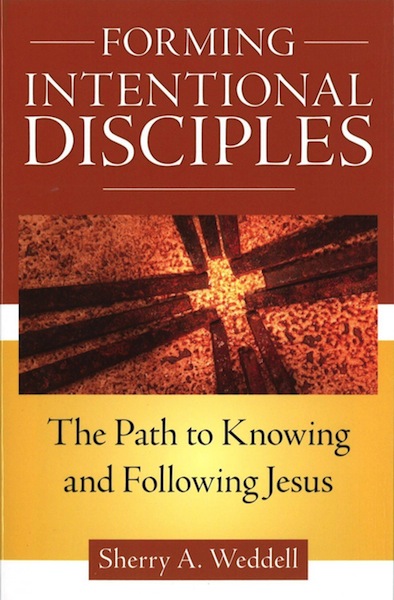
Forming Intentional Disciples
How can we transmit a living, personal Catholic faith to future generations? By coming to know Jesus Christ, and following him as his disciples. These are times of immense challenge and immense opportunity for the Catholic Church.
Consider these statistics for the United States.
Learn about the five thresholds of postmodern conversion, how to open a conversation about faith and belief, how to ask thought-provoking questions and establish an atmosphere of trust, when to tell the Great Story of Jesus, how to help someone respond to God's call to intentional discipleship, and much more.
And be prepared for conversion because when life at the parish level changes, the life of the whole Church will change.
Buy this book on Amazon for only $11.99.

Consider these statistics for the United States.
- Only 30 percent of Americans who were raised Catholic are still practicing.
- Fully 10 percent of all adults in America are ex-Catholics.
- The number of marriages celebrated in the Church decreased dramatically, by nearly 60 percent, between 1972 and 2010.
- Only 60 percent of Catholics believe in a personal God.
Learn about the five thresholds of postmodern conversion, how to open a conversation about faith and belief, how to ask thought-provoking questions and establish an atmosphere of trust, when to tell the Great Story of Jesus, how to help someone respond to God's call to intentional discipleship, and much more.
And be prepared for conversion because when life at the parish level changes, the life of the whole Church will change.
Buy this book on Amazon for only $11.99.
Subscribe to:
Posts (Atom)